Composite & PVC Decking in Greensboro, NC:Trex, TimberTech & product-specific options

Greensboro Deck Builders helps homeowners compare composite and PVC decking for projects in Greensboro, North Carolina, including new construction, complete replacement and redecking on a suitable frame.

Tell us about your deck

Required fields. No appointment booked.

A material decision should name the board collection and its installation requirements. Trex and TimberTech are examples of brands homeowners may consider. Different collections use different compositions, profiles and finishes. PVC and wood-fiber composite are distinct materials, so the brand name alone does not explain what is being proposed.

A low-maintenance surface still needs cleaning, debris removal and a sound structure. Shaded decks can collect leaves and stay damp, while exposed boards can become hot. Review samples where the deck will sit and compare the current care instructions.

For an existing wood deck, assess framing, support spacing, fasteners and stair construction before proposing new boards. A more moisture-resistant surface should not be mistaken for a replacement of deteriorated wooden structural components. Include the current surface, frame condition, approximate size and preferred board options in your inquiry. Describe whether you want new construction, a full rebuild or a board replacement, along with any changes to stairs or railings that should be priced with the surface.

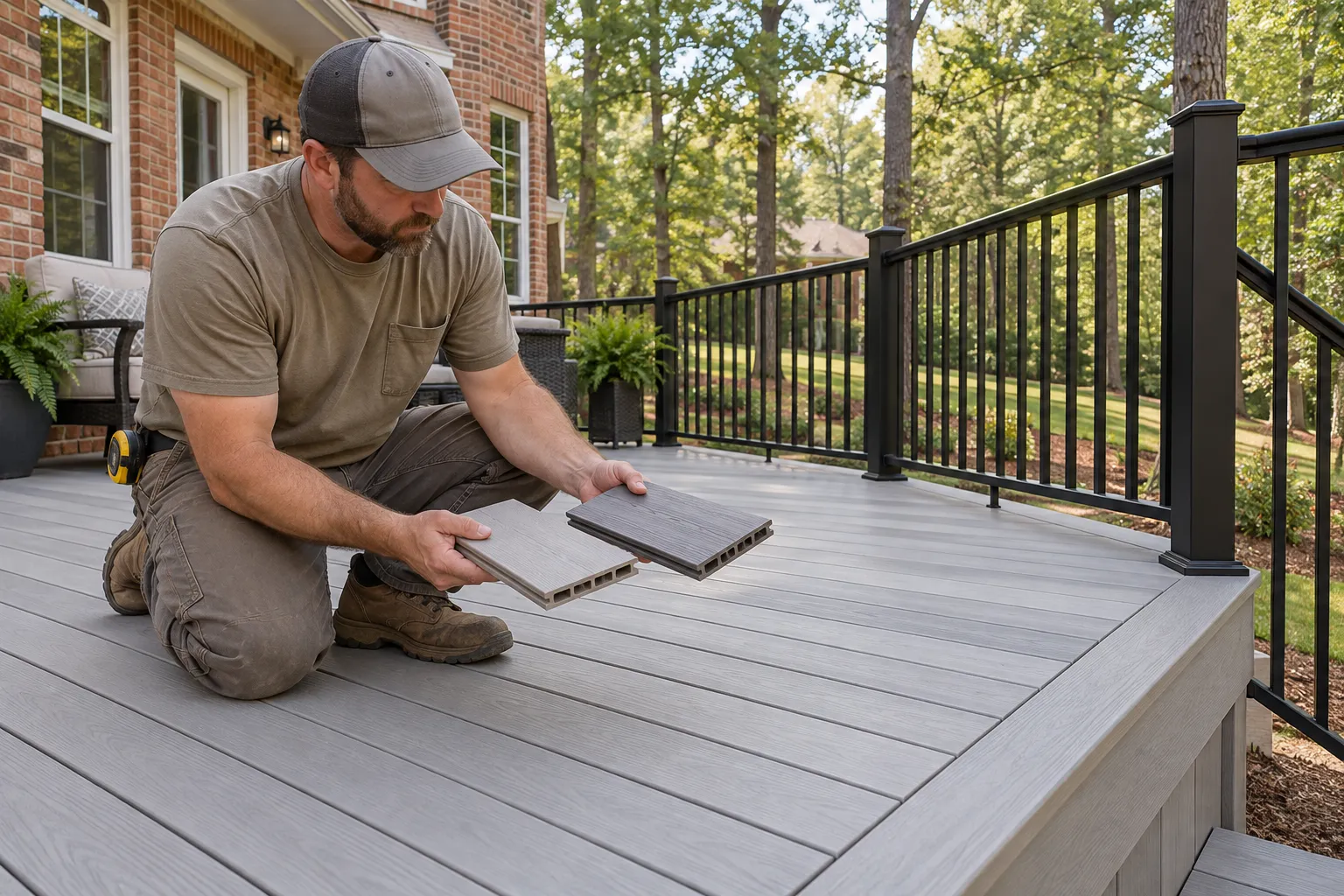
Illustrative carpenter comparing composite board samples on a deck beside a brick home

Compare composite and PVC products with the frame, exposure, fasteners and upkeep in view.

Composite & PVC Decking services

Define the work around the condition and use of your space.

Capped composite systems

Compare cap coverage, board profile, texture, color and accessory options within the actual collection. The plan should identify compatible fasteners and how cut ends, fascia and stairs are finished. A complete system specification is more useful than an estimate that only says composite decking. Check how boards meet the house and how picture-frame borders or angled layouts are supported. Include trim and fascia movement details in the product discussion, so a preferred appearance has a corresponding installation plan.

PVC as a material choice

PVC decking has a different composition from composite containing wood fiber. Review suitability for the intended application, support requirements and movement allowances. The deck may still have a wood frame, so moisture resistance of the board does not describe every part of the structure. Compare the exact collection with the framing arrangement, sun exposure and intended furniture. Product-specific care and warranty conditions should be available with the proposal rather than inferred from a general claim about plastic decking.

Wood-to-composite redecking

Conversion begins with a frame assessment. Existing joist spacing and stair support may need changes to match the selected board. Ledger condition, flashing, posts and foundations need consideration independently of the new surface. Include any required structural work in the proposal rather than assuming the boards can be exchanged directly. Look at how the replacement surface meets doors and retained rails. A change in board thickness or layout can affect visible edges, fascia and stair transitions even when the main deck footprint remains unchanged.

Color, shade and everyday use

Compare samples in sun and shade, ideally alongside the home exterior and railing finish. All decking can heat up in direct sun. Furniture position, shade and texture matter alongside color. Follow the product instructions for furniture protection, cleaning and any accessories placed on the surface. Bring more than one color into the discussion and include the trim and railing finish. A small indoor sample cannot show every outdoor condition, so review realistic expectations for temperature, cleaning and normal surface wear.

The details matter

Compare the entire product system

Boards, fastening, rails, fascia and stairs form the visible system. Framing and house connections support it. Ask for the named products and the scope of structural work before comparing the price of two composite options.

Compare the ownership routine with wood decking before choosing the surface.

Explore the material guide

Composite & PVC Decking process

A clear scope connects the first assessment to the finished deck.

Assess the deck and exposure

Identify sun, shade, leaf debris, planned use and the condition of any existing frame.

Review product samples

Compare composition, collection, color, texture, care and compatible accessories.

Specify structure and installation

Confirm joist and stair requirements, fasteners, ventilation and manufacturer instructions.

Keep the care information

Retain the product identification and current cleaning guidance for the finished deck.

What a complete proposal should cover

Composite & PVC Decking FAQs

Clear answers before the project takes shape.

Is Trex the same as all composite decking?

Trex is a brand of composite decking. Other manufacturers and collections have different profiles, compositions and finishes. Compare the actual products rather than treating every composite board as interchangeable.

Is PVC the same material as composite?

No. PVC and composites containing wood fiber have different compositions. The chosen product requirements and application matter more than a broad low-maintenance label.

Can I retain my old wood frame?

Possibly, if its condition and design suit the selected product. New boards may require different support spacing, stair work or fastening. The structure should be assessed before reuse is proposed.

Will composite stay cool and need no care?

No surface should be promised to stay cool in all sun conditions. Composite and PVC also need cleaning and appropriate use. Compare product guidance, color and shade as part of the decision.

What could your deck become?

Start with your property. Define the work you need.