
Deck Staining & Sealing in Greensboro, NC:Cleaning, preparation & wood finish renewal

Greensboro Deck Builders helps homeowners plan deck staining and sealing in Greensboro, North Carolina, including cleaning, preparation and surface finish renewal on suitable wood.

Tell us about your deck

Required fields. No appointment booked.

Restoration and refinishing often describe parts of this same maintenance scope. Begin with the condition of the boards and the previous coating. A cleaner or new finish cannot repair rot, loose connections or a deteriorated structure. Necessary repairs should be identified before surface work is proposed.

The desired appearance matters, but coating compatibility and preparation determine the process. Transparent, semi-transparent and more opaque finishes have different effects and future maintenance needs. Compare the actual product and the condition it is designed for.

Shade, recent rain and drying conditions can affect timing. Follow the selected cleaner and coating instructions for preparation, moisture and application. Avoid relying on one fixed staining schedule for every deck or every season. Describe the current finish, approximate age of the last coating, deck size and visible peeling or wear in your inquiry. Include rails and stairs you want refinished along with shaded areas that dry slowly. That information helps define preparation before a finish product is chosen.

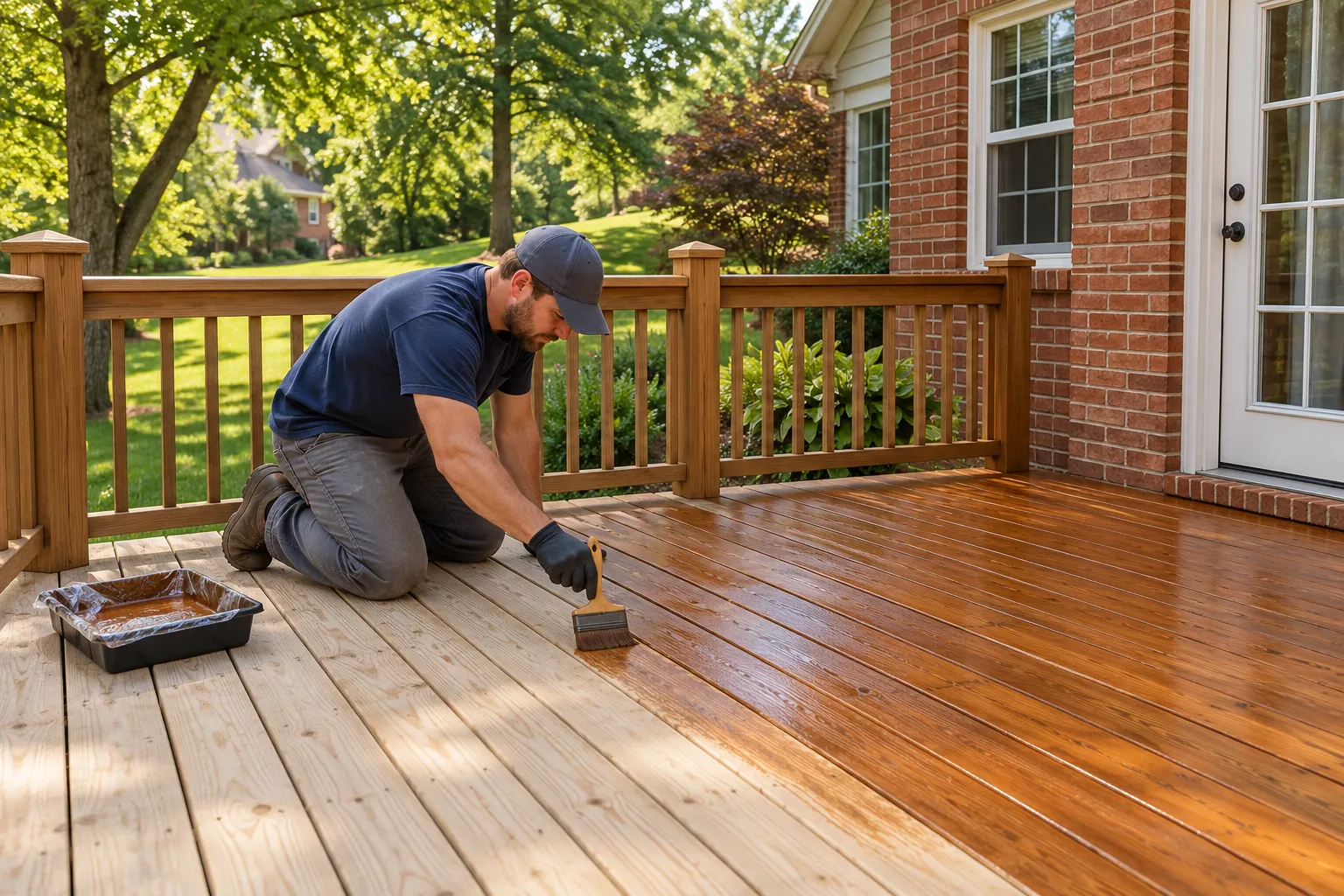
Illustrative contractor applying a finish to prepared wood decking

Renew a suitable wood surface with preparation and a coating matched to its condition.

Deck Staining & Sealing services

Define the work around the condition and use of your space.

Cleaning and existing-coating assessment

Identify dirt, organic debris and the coating already on the wood. The preparation method should suit the surface and product. Aggressive pressure washing can damage wood if used incorrectly; the proposed method and any stripping work should be described rather than assumed. Include rails, stairs and other intended surfaces in the condition review. Discuss protection for nearby plants, siding and finished materials before work begins, and clarify whether the quoted preparation covers the entire specified area or only selected components.

Preparation before refinishing

Repairs, loose fasteners, damaged boards and areas of failed finish may need attention before coating. The process should account for cleaning, necessary sanding or removal of incompatible coatings and suitable drying. Preparation is part of the project, not an incidental step omitted from the estimate. Identify which rail faces, stair parts and board edges are included in the preparation. Existing peeling or uneven absorption may require different treatment from sound bare wood, and those differences should be described in the proposed work.

Stain and sealer selection

Compare color, opacity, application requirements and compatibility with the wood and existing finish. A product that works on bare suitable wood may not suit a previous film-forming coating. The proposal should name the product and identify the expected appearance. Review a suitable sample or test area when the final color is important. Include the application scope on rails and stairs as well as boards, and explain how the selected finish will be renewed in a later maintenance cycle.

Weather and ongoing care

Application needs conditions within the product instructions. Recent rain, shade and moisture in the lumber affect readiness. Include realistic care guidance after the finish is applied. Routine debris removal and inspection remain relevant between coating cycles. Clarify when furniture can return and how the surface should be cleaned under the chosen product guidance. A useful proposal also describes how unsuitable weather affects scheduling, rather than promising a finish date regardless of drying conditions.

The details matter

A new finish begins with suitable wood

Surface renewal makes sense when the boards and structure can remain in service. If the wood is unsound, discuss repair or replacement first. A uniform new color should not hide unresolved damage.

If boards need replacement rather than coating, compare redecking with surface finish renewal.

Explore the material guide

Deck Staining & Sealing process

A clear scope connects the first assessment to the finished deck.

Assess wood and coating

Identify the condition, existing finish and necessary repairs.

Define preparation

Specify cleaning, stripping or sanding as needed, with appropriate drying.

Choose the compatible finish

Confirm the product, color, opacity and required application conditions.

Set the care routine

Keep product instructions and plan ongoing inspection and debris removal.

What a complete proposal should cover

Deck Staining & Sealing FAQs

Clear answers before the project takes shape.

Are restoration and refinishing separate services?

Those terms often describe overlapping preparation and finish-renewal work. Define the actual cleaning, repairs and coating steps instead of treating each label as a completely different project.

Can stain cover damage?

A coating can change appearance but does not restore structural strength or repair rot. Assess damaged wood and connections before choosing a finish.

How often should a Greensboro wood deck be refinished?

The interval depends on exposure, use, condition and the coating. Inspect the surface and follow product guidance rather than assuming one calendar interval for every deck.

Can composite be treated with wood stain?

Do not assume a wood coating suits composite or PVC. Follow the actual decking manufacturer instructions for cleaning and any permitted surface treatment.

What could your deck become?

Start with your property. Define the work you need.