Greensboro Deck Builders helps homeowners define deck repair in Greensboro, North Carolina, from a damaged board or loose railing to assessed corrections in stairs or framing.
A useful repair scope identifies the problem and the parts supporting it. The visible symptom may not describe the full damage. A moving rail can involve its post connection; a soft board can sit above deteriorated framing. An assessment should establish whether damage is limited enough for repair or whether replacement is the more appropriate comparison.
In a shaded backyard, check where leaves and moisture collect and whether water is being held against the structure. Repairs should address the relevant cause as well as the component being replaced. Coating over damaged wood is not a structural repair.
If the deck has movement, a failing stair or a loose guard, avoid using the affected area until its condition is assessed. Describe the visible problem, deck height, current material and access in the inquiry so the necessary scope can be discussed. Include which components are affected and whether the problem has changed over time when requesting an estimate. A clear description helps distinguish a localized repair discussion from the broader assessment needed when several structural areas appear to be deteriorating.
Identify the damaged components and the cause before deciding how much of the deck needs repair.
Deck Repair services
Define the work around the condition and use of your space.
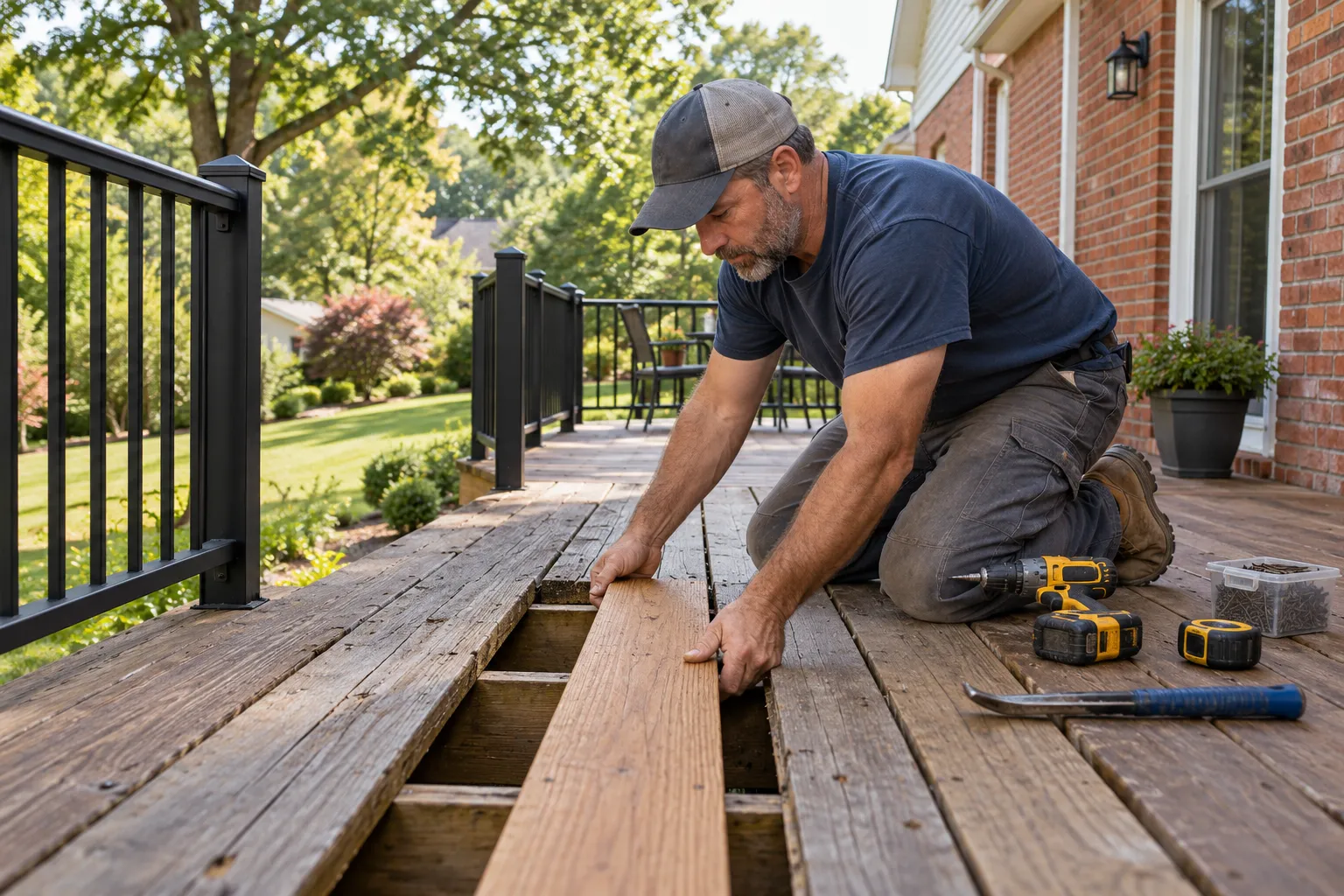
Individual board repairs
Replacement boards need to fit the existing system and connect to suitable framing. Identify the affected area and check the support below it. Material matching may be limited by age, wear or discontinued products. The repair proposal should state how the new boards are fastened and finished. Include the method for reviewing nearby boards and any concealed deterioration encountered during removal. A localized repair is most useful when the affected area and the retained material are understood, with a clear limit to the work proposed.
Railing and stair repairs
Review posts, connections, stair supports and landings alongside visible rails or treads. A small surface repair may not resolve movement caused by the structure. Where a complete rail or stair replacement is needed, define those components rather than leaving them inside a broad repair allowance. Compare repairing a specific connection with replacing the whole affected assembly. The proposal should identify which posts, supports or attachment points remain, and explain how the repaired area relates to the rest of the deck structure.
Assessed framing corrections
Deteriorated joists, beams, posts or connections need a specific design and access plan. Their extent determines whether limited repairs are practical. New decking should not hide damage that remains unaddressed. Appropriate engineering or permit questions depend on the actual structural work. Identify temporary access and any removal needed to reach the affected parts. A structural repair allowance should describe the components involved and how additional concealed damage is handled, rather than covering every possible finding with one vague line.
Repair before surface finishing
Cleaning, staining and sealing can follow suitable repairs, but the order matters. Establish the wood condition and required component changes before choosing a coating. A finish should be compatible with the material and any previous coating; it cannot make unsound framing suitable for continued use. Include preparation and finish matching for repaired boards if surface work follows. Fresh lumber and older boards may take a coating differently, so describe the expected appearance alongside the component repair and ongoing maintenance instructions.
The details matter
Decide whether the damage is local
A repair works best when the problem can be defined and the remaining deck is suitable. Widespread deterioration, repeated failures or a changed layout can make a full rebuild worth comparing. The assessment should explain that decision clearly.
When damage affects the deck more broadly, compare full replacement with a limited repair.
A clear scope connects the first assessment to the finished deck.
Record the symptoms
Note the affected board, rail, stair or connection and any movement or moisture.
Assess supporting components
Check the structure behind the visible problem and determine the extent of damage.
Define repairs and related work
Specify replacement material, connections and any required finishing or review.
Review the repaired area
Compare completion with the identified problem and keep maintenance instructions.
What a complete proposal should cover
The affected components are listed.
The underlying cause is assessed.
Structural and cosmetic work are distinguished.
Replacement products and connections are specified.
Limits of material matching are discussed.
Deck Repair FAQs
Clear answers before the project takes shape.
Does a soft board mean the whole deck needs replacement?
+
Not necessarily. The condition of the framing and the extent of damage determine the options. Limited damage may suit repair; broader structural deterioration can call for rebuilding.
Can staining repair rotten wood?
+
No. Surface coatings do not restore unsound wood or connections. Assess and complete the necessary repairs before discussing a finish.
Can repaired boards match the old ones exactly?
+
Exact matching may be limited by age, weathering or product availability. Discuss the likely appearance and whether a larger surface change would provide a more consistent result.
Should I keep using a deck with a loose rail?
+
Avoid using the affected area while the condition and connection are assessed. A loose guard or moving stair can involve more than the visible component.